Archive for June, 2016

Articles

Putting in a good word

In Uncategorized on June 20, 2016 by mstevensrev

Peacock_terms.png

When you are doing your job the right way, it doesn’t hurt to ask for a good word to be put in for you, but people will do it naturally. I have heard it said that when you do something good people will tell four people, when you screw up they tell eight. Needless to say negativity spreads faster then goodness. So before someone asks, go and put in a good word for them. Be intentional about helping someone that has done a good job for you.

Words are singularly the most powerful force available to humanity. We can choose to use this force constructively with words of encouragement, or destructively using words of despair. Words have energy and power with the ability to help, to heal, to hinder, to hurt, to harm, to humiliate and to humble.

-Yehuda Berg

Articles

The server is yelling

In Uncategorized on June 16, 2016 by mstevensrev

image

In most cases this is not good for anyone. Often it can mean that the person has made it as far as they are going to in the company. Time to hang up the apron.

Yet not when the guest is old and can’t hear. The yelling can actually be loving and beautiful.

I’d probably be famous now if I wasn’t such a good waitress. -Jane Siberry

Articles

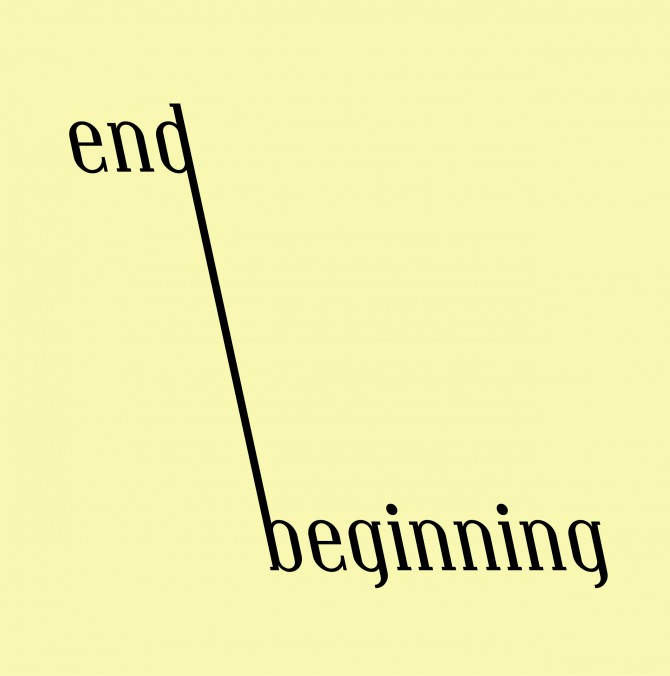
The ritual of beginning and ending

In Uncategorized on June 13, 2016 by mstevensrev

image

Sundays are important to me. My faith tradition has traditionally celebrated the community activity on this day. Much has been written on the shift from Saturday to Sunday and theologians make big deals over whether it is the start or finish of the week and create a narrative on why this is important. For me this is all noise, and limits the important conversation to those that subscribe to a specific creed or calendar.

Sunday for me is both ending and beginning for me. It is a weekly rhythm that provides space in my life for reflection, and time for silence. It gives me a break, a well needed and often well deserved break. And I am grateful for it without explanation or desire to drop it into an unnecessary category for explanation. I’m curious as to how others end and begin their life rhythm.

Happiness is not a matter of intensity but of balance, order, rhythm and harmony.
-Thomas Merton

Articles

Misconceptions within Localization: Part III

In Uncategorized on June 9, 2016 by mstevensrev

technology-wallpaper-22In ten years I’ve been working in or near the gravitational field of localization in this brief time I did take a break and move more into software development, and honestly I missed the tangible nature of delivering products and content globally. My passion for this industry has motivated me to look at some of the myths that people I work along side believe about what we do. For instance in Part I of this series I discuss how people think they ended up here by accident. and Part II was examined localization is an insular industryToday we look at the third misconception.

Localization is lagging regarding technology. This is certainly a sliding scale, to whom do you compare the localization industry and conclude it is lagging regarding technology? When working with the top technology companies that have hundreds and even thousands of engineers and developers employed, perhaps. Also localization professionals have been involved in innovation regarding machine translation, machine learning, and artificial intelligence. Do the current set of tools in the industry solve the complex challenges faced in localization fully? No.

But Peter Thiel is quoted as saying, “We wanted flying cars, instead we got 140 characters.” Yes the potential of technology often exceeds the execution. All of this does not equate with lagging. And in fact there are multiple cases for the opposite, work that combines the most ancient and the most innovate is found in localization. Connecting the entire work through the internet cannot be fully realized without localization.

One organization committed to keeping localization at the forefront of technology is TAUS. It is here where the brightest and most intelligent people in the industry are meeting in order to share their perspectives on solutions to the most complicated and future thinking technologies for the industry. It would be wonderful for them to market themselves more broadly and tell their stories in a way that changes this misconception.

Keep an eye out for the next post in the series coming next week regarding the misconception that there is no money in the industry.


Technology gives us power, but it does not and cannot tell us how to use that power. Thanks to technology, we can instantly communicate across the world, but it still doesn’t help us know what to say.

-Jonathan Sacks

Articles

Misconceptions within Localization: Part II

In Uncategorized on June 8, 2016 by mstevensrev

mediumThe localization industry is where I have spent the last ten years of my career. Localization is is the process of adapting a product or content to a specific locale or market. It is obscure to many that are not directly involved in it, and even to many who use our services seem to be in the dark about what really goes on. I’m taking a look at some of the misconceptions or myths that I hear often with our industry itself, in Part I, I addressed the Misconception that I ended up here by accident.

Localization is an insular industry. There are a number of localization related events globally each year, and often I hear from people in the industry that they are tired of these events because they always see the same people. This is used as proof that we are an insular industry.

The people I hear this from have little exposure to other industries, if they did they would see that often there are the same people that make it to events whether it is within Travel, Fashion, or any other industry vertical. So this is common to how people work in general, they meet and collaborate with people that work on similar ideas.

Localization does have a few qualities that I find very interesting compared with other industries. While localization and translation are an ancient trade that has enable commerce since the beginning of time, as an ‘industry’ it is very young. There have always been translators willing to work, but organizing good process, scale, and the other dynamics of a mature industry have only happened recently. I point this out because even now within the industry the people that have started Computer Assisted Translation (CAT), Unicode, and other industry changing moments are still around. Without having to go too far these people are all within reach and in my experience often are extremely generous with their experiences.

Lastly on a very personal note, many people I work with in localization I would consider close friends and are people that I care about deeply. Since arriving to LocWorld Dublin early I have had the chance to catch up with my friends that make working in this industry the best experience of my life. In general, people that end up in localization have a large, imaginative, and creative view of the world and others. These are the folks I find great joy in talking to about how the world will be changed for the good. because of our work and presence in it.

If you haven’t read Part I of this series go back and do it, over the next few days I’ll also be talking  on additional Misconceptions within Localization as I explore the following: we are lagging regarding technology and there is no money.

Humility is not thinking less of yourself, it’s thinking of yourself less.

-C. S. Lewis


Articles

Misconceptions within Localization: Part I

In Uncategorized on June 7, 2016 by mstevensrev

career_mistake-750x422There are numerous localization errors that are shared on the internet and everyone outside and within the industry have their favorites they like to share at a cocktail party. Though there are a few misconceptions (or myths) that I generally hear from people in this industry that are worth exposing over the next few days.

I ended up here by accidentWhenever a person begins to tell their story of how they ended up in localization it often can be summarized as one big mistake on the way to what they really wanted to do. That doesn’t matter if it was to be a translator, interpreter, entrepreneur, or software developer, they often will share how they have ended up here and…can’t get out.

I grew up in a family where both my father and grandfather had similar stories of how they ended up in their careers, my dad was an engineer that ended up a window cleaner and my grandfather was a veterinarian  that ended up a cattle trader. Both seemed to live with a ongoing regret about their careers even though each was remarkable at their jobs, provided for their families, and maintained a sold reputation in the communities they lived and worked.

As I have looked at how I ended up in localization, it is surprising and yet I know that I was born to be here. This is what every step in my professional career has led me to, and I am incredibly grateful for where it has led. For me I didn’t end up here by accident rather I was born for it.

Check out the next few posts on Misconceptions within Localization as I explore the following: the industry is insular, we are lagging regarding technology and there is no money.

I truly believe that everything that we do and everyone that we meet is put in our path for a purpose. There are no accidents; we’re all teachers – if we’re willing to pay attention to the lessons we learn, trust our positive instincts and not be afraid to take risks or wait for some miracle to come knocking at our door.

-Marla Gibbs

Articles

From Dragons to Zombies, how entertainment tackles localization for the good and bad, Part II

In Uncategorized on June 2, 2016 by mstevensrev

Over a week ago, I was discussing the Game of Thrones Hodor failure just before I attended the Fast Company LA Innovation conference with a co-worker and client. The very next day I had learning how one media company was taking steps at source creation to prevent such failures. At this conference we were driven around LA, California visiting companies in a neighborhood that were doing innovated things.

skybound-social_4My neighborhood was Culver City, and the first stop was Skybound. This is the company formed by the creators of The Walking Dead. After learning about the companies philosophy and vision, they shared with us an upcoming project they have call Five Year. It is an apocalyptic show that focuses on an family dealing with the news that the world will be destroyed in five years, and sustaining themselves in the midst of ever growing chaos. Instead of merely releasing in English or subtitling the series in another language. They have partnered with Viki, a platform used to share K-Dramas and crowdsource the translation of their subtitles, to use the IP in the English version of Five Years and fully localize (rewrite in a Korean context). This approach to content solves so many challenges companies face and completely eliminates what happen with the Game of Thrones Translation.

Skybound is creating one way to put out the best possible quality global content, perhaps the down side would be it is costly and requires trusting others with your ideas. In my opinion this benefits the entire world and creates a collaborate relationship that is stronger then merely translating, it is a level deeper in the creative process that captures something magical related to being global. Korean is only a first step for Skybound look for other languages to follow. In this experimentation it is the fans that truly benefit.

In addition the global writing team also benefits. At some point I came across the conversation of economists comparing the pie model vs. the candle model. In the pie model there are only so many slices and you must make sure to secure you piece of the pie. Where as Thomas Jefferson was give credit for the Enlightenment perspective of ideas that drive an economy as a candle, and when I share my light with you it makes the entire room brighter. In looking for references on this I came across the article:

Traditional Economics Failed. Here’s a New Blueprint.Why true self-interest is mutual interest. By Eric Liu and Nick Hanauer

It is worth a read an hopefully will inspire you to share a good idea with someone else today. Let’s think about how our work together, especially creatively, leads to better content for everyone.

It is paradoxical, yet true, to say, that the more we know, the more ignorant we become in the absolute sense, for it is only through enlightenment that we become conscious of our limitations. Precisely one of the most gratifying results of intellectual evolution is the continuous opening up of new and greater prospects.

-Nikola Tesla

Articles

From Dragons to Zombies, how entertainment tackles localization for the good and bad, Part I

In Uncategorized on June 1, 2016 by mstevensrev

Game of Thrones is a cultural phenomenon, impacting the world globally where passionate fans are engulfed in a world of ancient battles, mystical characters, political struggle, and most importantly dragons. So much of what they do is excellent from a story telling perspective and if you are a fan, the episode on May 22nd was one of the best stories to have experienced. If you have not yet watch and do not with to have it spoiled please stop reading now.

bd054eb0-166c-0132-083c-0eae5eefacd9

For those who have seen it, the backstory of the character Hodor was revealed. A giant of man with a strong gentle heart that physically cares for the crippled son of a ruler, Hodor can only speak one word, which is “hordor”. He has become a fan favorite and even inspired Game of Thrones as told by Hodor. This past episode we learn at Hodor’s death that he was actually saying, “Hold the door.” A picture of the martyrdom he would face, giving his life for Bran Stark.

A wonderful story, and yet a complete failure when it comes to translation, as Hodor only works in English as a shortened version of “hold the door”. The fail comes in that all the translations of Game of Thrones translated the character’s name as Hodor, rather then localizing it in that language for this event. Localizing characters name is a practice in the book, just this one key instance was a complete fail and set up a horrific situation for the translator working on this show. The entire play of language was lost in every language but English, that is what I would call an opportunity lost. For the international fans, this is a big disappointment.

Tomorrow I will follow this up with what one company (Skybound) is doing to make sure such failures do not happen with their content…

Translation is like a woman. If it is beautiful, it is not faithful. If it is faithful, it is most certainly not beautiful.

-Yevgeny Yevtushenko